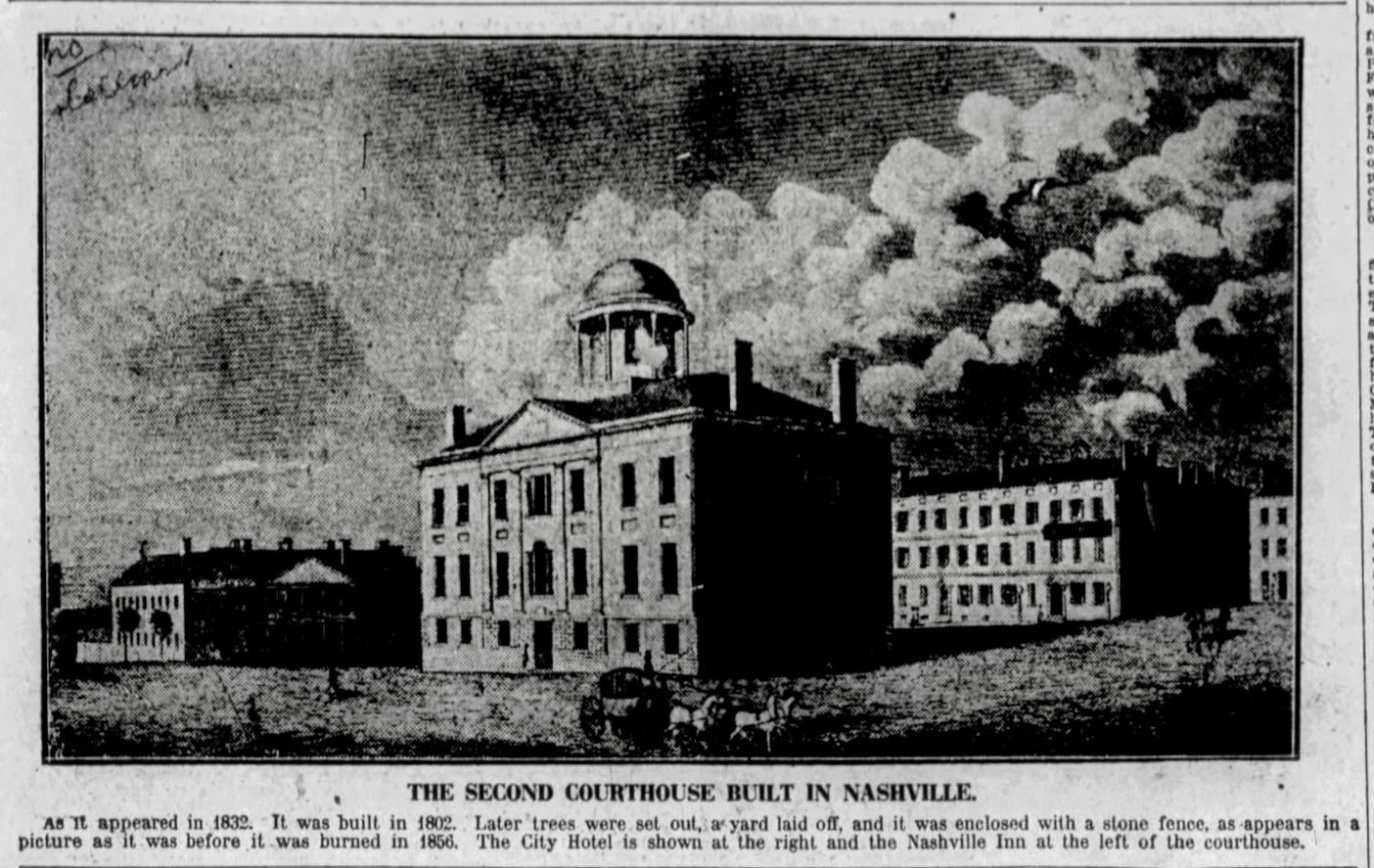
 Photo: Unknown authorUnknown author / Wikimedia Commons (Public domain)
Davidson County
Nashville proper — the only county in the metro with a fully consolidated city-county government, and the one every surrounding county's commute problem is about. If you're downtown, in a honky-tonk, or touring a studio, you're in Davidson.
Davidson County and the city of Nashville have been the same legal entity since 1963, when city and county government merged into Metro Nashville — one of the earlier and more complete city-county consolidations in the country. That single fact explains a lot about how the place runs: one mayor, one Metro Council, one school district (Metro Nashville Public Schools) covering roughly 526 square miles from the honky-tonks of Broadway to suburban-feeling pockets like Bellevue and Hermitage. There's no separate incorporated "Nashville" to move to versus "the county" — you're either inside the old core urban services district or the more suburban general services district, and that mostly affects things like trash pickup and street lighting rather than schools or taxes.
It's the second-most-populous county in Tennessee, at roughly 715,000 residents by the last census and still growing, and it's the job center the entire region drives into every morning — a meaningful share of the workforce in every neighboring county commutes into Davidson daily. That gravitational pull is also why it's the most expensive place to actually own a house relative to what it was a decade ago: the typical home value has climbed into the $400,000s, still cheaper than Williamson County to the south but a steep jump from Nashville's reputation as an affordable Southern city, which stopped being accurate around the mid-2010s.
What Davidson has that no surrounding county can replicate is density of culture: the Ryman, the Grand Ole Opry, Music Row, the honky-tonks, Vanderbilt and Belmont, the professional sports franchises, and neighborhoods like East Nashville, 12 South, and Germantown that read as genuinely urban rather than suburban-with-sidewalks. It suits people who want to walk or bike to dinner, who work downtown or in the Gulch, or who came to Nashville because of the music industry specifically — the tradeoff is Metro school zoning that varies enormously block to block, and property taxes and traffic that are worse than anywhere else in the region.
Highlights
- —Home to the only consolidated city-county government in the metro — one mayor, one council, one school district
- —Second-most-populous county in Tennessee at roughly 715,000 residents
- —Typical home value around $430,000, cheaper than Williamson but far above the region's historical reputation
- —Every honky-tonk, major venue, and both big universities (Vanderbilt, Belmont) sit inside Davidson's lines
- —The county the rest of the metro commutes into every weekday
Insider tip
If you're apartment- or house-hunting, Metro Nashville school zoning can flip dramatically street to street — check the exact zoned school address by address rather than assuming a neighborhood's reputation applies to the whole zip code.